

Kingston, Ontario, lies within the reach of Toronto, Montreal, and Ottawa. Kingston is cozy, quiet, and a vibrant city with a competent education system and quality health care.
According to Global News, more than 3,000 people relocated to Kingston in 2022, many from larger cities like Toronto and Ottawa. Drawn by the lower cost of living, a slower pace of life, and opportunities for education and retirement, many are choosing Kingston as their new home.
While the city has many appealing qualities, it also comes with a few drawbacks you may want to consider.
Before we dive into the advantages and disadvantages of moving to Kingston, let’s first look at some interesting facts about the city.
Interesting Facts About Kingston, Ontario
Kingston is more than just a beautiful city; it’s also full of fascinating and little-known facts that might surprise you. Here are some things about Kingston you may not know.
1. Kingston was Canada’s First Capital, But Only for a Moment

Kingston served as the capital of the United Province of Canada from 1841 to 1843. Their city hall is a testament to its short-lived status. However, the capital soon moved to Montreal.
Shortly after that, when riots destroyed Montreal’s legislature in 1849, the capital was transferred to Toronto and Quebec City. This was until Queen Victoria chose Ottawa as the permanent capital.
2. The City has a Unique Event called The Beat Beethoven Race

Kingston hosts a unique event called The Beat Beethoven Race. The participants must complete an 8km run or a shorter 4km run/walk around the streets of the city.
Runners are challenged to finish their course before the 50 minutes of Beethoven’s music come to an end.
This activity challenges runners to race against the clock while enjoying the music. Participants of all ages and from various places come together to take part in this unique event.
This event has been held since 2004, but was paused when races were canceled in 2020. A virtual edition took place in 2022, and organizers are planning a full return in 2025.
3. Home to Canada’s Oldest Maximum Security Prison
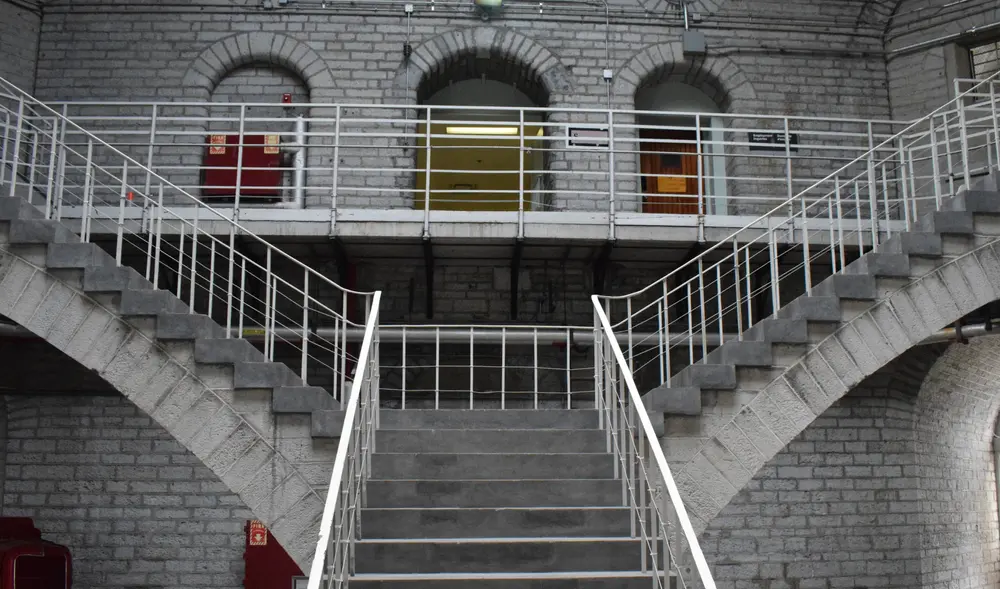
The Kingston Penitentiary is one of the oldest prisons that has been continuously operating until its closure in 2013.
Constructed between 1833 and 1834, the facility officially opened on June 1, 1835. Designated a National Historic Site in 1990, it once housed some of Canada’s most notorious criminals.
Kingston Pen Tours offers a tour of the facility. You can step inside the walls of Canada’s oldest penitentiary and take a look at the history of Kingston Penitentiary and Regional Treatment Centre.
4. Kingston is Canada’s Most Haunted City

Kingston is often called the most haunted city in Canada due to its long history and many sites that have been reported to have paranormal activity.
One of these places includes the Kingston Penitentiary, which has been operating for about 180 years. This place was known for ghost sightings that were linked to its violent past.
Many visitors have also reported hearing mysterious noises and spotting shadowy figures at Fort Henry and Bellevue House. The city’s historic cemeteries, with their Victorian-era burials and rich history, have also inspired countless ghost stories; some claim to have seen apparitions or heard voices among the gravestones.
5. Kingston is Home to a Secret Underground Tunnel Network

Beneath Kingston’s historic streets lies a hidden network of secret tunnels, some dating back to the 19th century.
Originally built for military purposes, the tunnels connect forts, warehouses, and even some private buildings. They allowed soldiers to move supplies discreetly and safely across the city.
Today, some of these tunnels are open to visitors on guided tours, offering a fascinating glimpse into the secret underground history of Kingston, also known as the Limestone City.
Advantages and Disadvantages of Moving to Kingston, Ontario
Kingston, Ontario, is an appealing city with a lot to offer, from its rich history to a growing economy. But like any place, it has its advantages and disadvantages. Let’s take a closer look at the pros and cons of moving to Kingston.
| ADVANTAGES | DISADVANTAGES |
|---|---|
| Affordable Cost Of Living | Limited Job Market In Some Industries |
| Strong Education Opportunities | The City Has Harsh Winters |
| The City Has a Growing Economy | They Have a Limited Transit System |
| Safe and Friendly Community | High Housing Costs |
| Offers Easy Access to Major Cities | Fewer Large-Scale Shopping Options |
5 Advantages of Moving to Kingston, Ontario
There are many reasons to consider moving to Kingston. However, let us check what the advantages of living in this city are.
1. Affordable Cost of Living
According to Numbeo, Kingston is 14.6% less expensive than Toronto. The cost of living is pretty affordable except for rentals. As of September 2025, the average monthly rent in Kingston, Ontario, is approximately $1,700-$1900. The prices may vary depending on the area you decide to stay in.
Rental prices in Kingston vary depending on the location and size of the apartment. A one-bedroom apartment in the city centre typically ranges from C$1,200 to C$2,300, while outside the city centre, it ranges approximately from $1,400 to $2,000. For larger spaces, a three-bedroom apartment in the city centre ranges approximately from C$2,200 to C$4,000, and outside the centre, it ranges from $1,850 to $3,000.
The estimated monthly costs for a family of four are between $4500-$5500$, excluding rent. The estimated monthly cost for a single person is around $1300-$1500, excluding rent.
When talking about grocery prices, Kingston has 11.3% lower cost than Toronto. Though Kingston and Toronto do have a slight difference regarding restaurant, market, and utility costs, Kingston is much cheaper.
2. Strong Education Opportunities
Kingston is known for its quality educational system. Queen’s University is one of the best schools in Ontario, along with St. Lawrence College. These competent institutions offer excellent educational opportunities that contribute to the city’s academic community.
As per a report by the University, the city’s economy and community benefit greatly from these institutions. Queen’s University, with its long history and a global alumni network of 150,000, contributes approximately $1.9 billion annually to the Canadian economy.
Also, its faculty and researchers are driven by love for innovation and discovery. These achievements earned them awards such as the Nobel Prize, Herszberg Gold Medal, Sloan Research Fellowships, and 43 Canada Research Chairs with national impact.
3. The City Has A Growing Economy
The city of Kingston is a leader in education, healthcare, and technology, with a dynamic economy that contributes significantly to the province. According to a report by the Government of Canada, the city generates $9.6 billion in household and business incomes.
In addition to its strong economic output, the City of Kingston is actively promoting economic development through strategic plans. These initiatives focus on creating more job opportunities, attracting new businesses, and enhancing the community’s overall financial well-being.
4. Safe and Friendly Community
Kingston has a safe and friendly community. According to Statistics Canada, over the past decade (2008 to 2018), police-reported crime declined by 5% in Kingston, while a notably larger decline was seen in Ontario (-16%) and Canada (-17%).
The community enjoys the programs, volunteer opportunities, and local gatherings that enhance social and community engagement.
5. Offers Access To Major Cities
Kingston is an accessible location, for it is centrally located between Toronto, Ottawa, Montreal, and Syracuse. Traveling to nearby cities typically takes about 2-3 hours.
Many residents rely on Via Rail for travel to nearby cities. Kingston itself is small, quiet, and peaceful, yet it’s conveniently close to larger cities that offer a wide range of opportunities.
5 Disadvantages of Moving to Kingston, Ontario
Living in Kingston comes with many advantages, but it’s not without its drawbacks. Let’s take a closer look at some of the challenges you might face when moving to this city.
1. Limited Job Markets In Some Industries
Kingston is known for having good job opportunities related to education, healthcare, and government work. However, some industries have limited opportunities.
A recent study indicates that the city is facing a shortage of employment lands to accommodate future job growth.
Nonetheless, the government continues to strategise solutions to address the employment land shortfall and support sustainable economic development.
2. The City Has Harsh Winters
Kingston is known to have extremely cold temperatures, heavy snows, ice, and freezing rain during the winter season, which creates significant hazards. This can make outdoor activities very challenging.
During this time, the city experiences cold due to snowy winters and strong lake winds.
To stay safe, it is best to prepare ahead of time by preparing proper winter clothes and by keeping indoor spaces warm.
3. Limited Public Transit System
In Kingston, many people get around by walking or cycling. While buses are available, they’re most commonly used by students traveling to and from school.
Kingston has no subways or commuter trains, and most buses run less frequently at night or on weekends. While the city center is well-suited for biking and walking, having a car offers a significant advantage for getting around.
4. High Housing Costs
Kingston belongs to the top 10 most expensive places to rent a house in Canada. Due to Kingston’s popularity and location, real estate prices have been up in recent years.
Additionally, due to demand for student housing, rental costs were particularly high, especially in downtown areas and near Queen’s University.
As of September 2025, there is a 1.7% increase in the cost of rent in Kingston, which means an estimated additional cost of C$31 per month.
Even though Kingston is still cheaper than Toronto, the affordability of house rents has become a growing issue.
5. Fewer Large-Scale Shopping Options
Kingston provides plenty of options for everyday shopping, but those looking for a broader range of brands or specialty items may find fewer choices compared to larger urban centers.
The Cataraqui Centre is one of the largest malls in southeastern Ontario, with over 140 stores that offer a mix of retail, dining, and services. Downtown Kingston also has unique local shops that sell products, although the selection is limited.
The establishments within the city would offer basic shopping needs, but most residents seeking luxury and a wide variety of products would need to travel to nearby towns.
Conclusion
Kingston has much to offer, from excellent education and quality healthcare to its affordability, easy access to major cities, and a welcoming, diverse community. Beyond these practical benefits, the city’s friendly atmosphere makes it an inviting place to call home.
That said, it’s essential to keep potential challenges in mind. Job opportunities can be limited, winters are often harsh, and rental costs may put a strain on your budget.
If you’ve decided to make Kingston your new home, consider hiring professional Kingston movers to make your relocation as smooth and stress-free as possible.
Frequently Asked Questions
1. Why should I consider moving to Kingston, Ontario, in 2025?
You can consider moving to Kingston because it has quality universities, good healthcare facilities, a friendly community, and offers easy access to Toronto, Ottawa, and Montreal. Moreover, the cost of living is cheaper than in other cities in Canada.
2. How much salary does a single person need to live comfortably in Kingston?
With the average rent in Kingston at around $1,800-$1900, you would need to earn roughly C$6,046 per month, or about C$72,552 per year, to stay within the general guideline of spending no more than 30% of your income on housing.
Of course, it’s important to factor in additional expenses like bills, groceries, and transportation. A rent affordability calculator can be a helpful tool to determine how much you should budget for rent.
3. How is the winter weather in Kingston?
Kingston experiences long and harsh winters. The temperature is usually below the freezing point, making outdoor activities hard. Snowfall can be heavy, and strong winds from Lake Ontario can make it feel colder.
4. Is the city safe to live in?
Yes, Kingston is considered safe, with a safety satisfaction rate of 93%. The city boasts a diverse population, and its schools and institutions promote inclusion and respect.
5. How should I prepare for moving?
When planning a move to Kingston, it’s crucial to prepare essential packing materials and be ready for challenges such as harsh winters, high rental costs, and limited transit options. Hiring professional movers can help ease the process and make your relocation far less stressful.


