
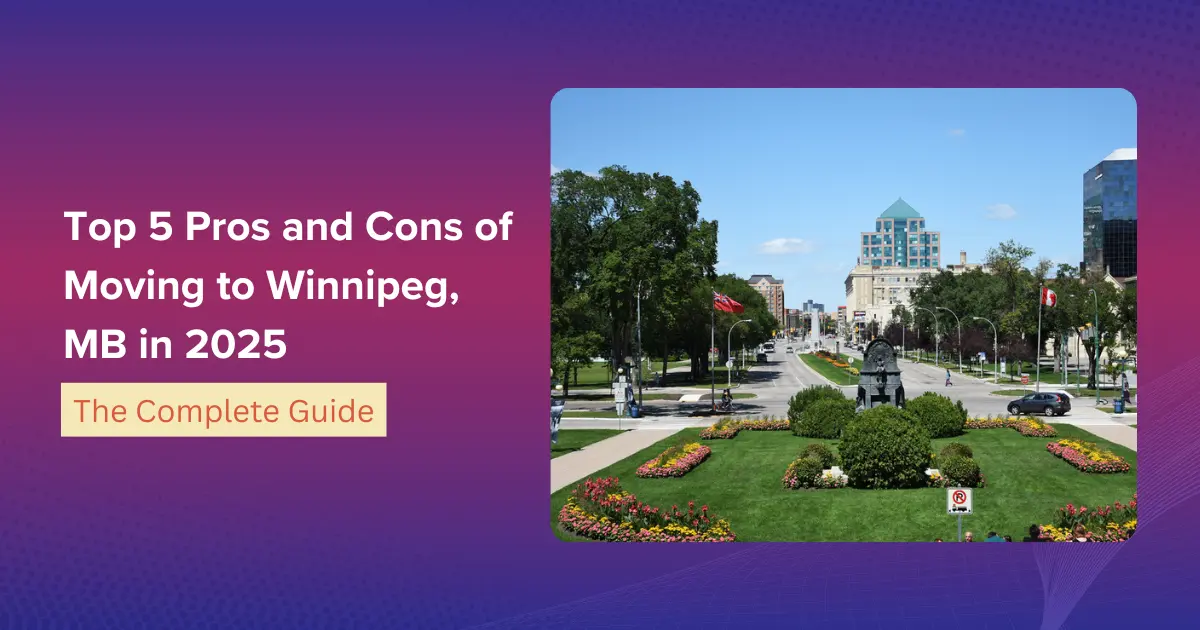
Moving to a new city happens for many reasons. Whether it’s a job change, military transfer, or a new environment, choosing the right city is an important decision.
Case in point is Winnipeg, one of the fastest-growing cities in Canada. Before you pack your bags and consider living in Winnipeg, let’s look at the pros and cons of moving there.
From excellent schools, a growing job market, plenty of sunshine, to lively arts and culture, the city is full of excitement and ready for you to explore.
But unlike any other city in Canada, Winnipeg has a few downsides, including limited transportation options, safety concerns, and harsh winters.
Here’s a comprehensive guide that features some interesting facts about Winnipeg, along with the pros and cons of moving there.
6 Fascinating Facts and Activities in Winnipeg, Manitoba
Winnipeg is the capital and largest city of Manitoba and the seventh largest city in Canada.
Celebrating various cultural events, Winnipeg residents enjoy a vibrant scene and a wide range of activities to join.
Let’s find out what they are.
1. World’s Largest Inuit Art Collection

The Winnipeg Art Gallery is home to over 24,000 pieces of contemporary Inuit art. This makes it the largest collection of its kind globally. You can also explore Canadian, Indigenous, and International works on display for a deeper appreciation of the city’s artistic depth.
Note: If you are under 18, you can enter the art gallery for free. The art gallery is closed on Mondays and Tuesdays.
2. The Manitoba Museum

Home to over 2.9 million specimens, the Manitoba Museum in Winnipeg features the Isotelus rex, the largest complete trilobite ever found. Discovered in northern Manitoba, it is perhaps the popular exhibit of the museum. The trilobite measures around 70 cm in length. In person, it looks roughly the size of an adult golden retriever.
3. Canada’s Oldest and Largest Folk Festivals

The Winnipeg Folk Festival began back in 1974 and draws over 70,000 attendees every July to Birds Hill Provincial Park. The original event in 1974 was completely free, and today it still remains a massive cultural gathering.
Pro tip: If you ever want to attend it, consider bringing your own chair (not taller than 2 ft) or tarp (8’ x 10’) and use them to claim spots early in the day.
4. A Vibrant Culinary Scene

When in Winnipeg, don’t forget to try out the signature items. Local favourites include honey dill sauce (quite popular with chicken fingers), Ukrainian-inspired perogies, pickerel fresh from Manitoba’s lakes, and the messy but beloved Fat Boy burger, smothered in chili.
For a finer dining experience, you need to check out the Oval Room Brasserie.
Located inside the historic Fort Garry Hotel, this one made OpenTable and Kayak’s list of Canada’s top 50 restaurants.
You can ask for a table near the windows. The views of Broadway and the hotel’s heritage interiors make the experience feel truly timeless.
5. Western Canada’s First University
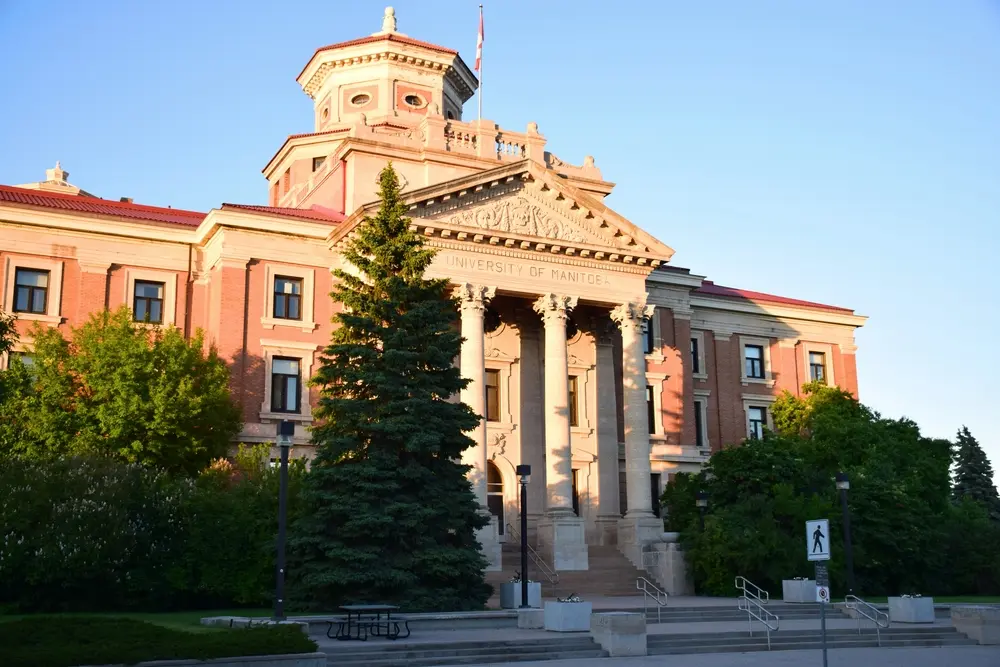
Founded in 1877, the University of Manitoba is the oldest in Western Canada. The university’s Fort Garry campus covers more than 280 hectares, making it one of the largest of its kind in the country.
Research from the University of Manitoba was instrumental in developing Canola oil in the 1970s.
6. Daily farmers’ market – Jardins St-Léon Gardens
St. Leon’s Gardens is a seasonal outdoor farmers’ market that supports over 200 local producers. It is open every day of the week and is the go-to spot for fresh, locally grown produce.
Early morning visits often offer the best picks; locals line up even before the doors open on weekends during peak season.
Advantages and Disadvantages of Moving to Winnipeg, MB
Before you begin checking off your moving checklist and contacting a mover in Winnipeg, you should consider what the city has to offer.
Here’s a quick overview of the advantages and disadvantages of relocating to Winnipeg, Manitoba.
| Advantages | Disadvantages |
|---|---|
| Affordable Cost of Living | Harsh and Long Winters |
| Diverse and Strong Job Sectors | Career Growth Remains Stagnant |
| Multicultural and Welcoming | High Property Tax Rates |
| Abundant Natural Beauty and Outdoor Spaces | Unreliable Public Transport |
| Plenty of Sunshine | High Rate of Violent Crime |
5 Advantages of moving to Winnipeg, MB
1. Affordable Cost of Living
Winnipeg is consistently one of the most affordable Canadian cities to live in. Housing and rental prices are much lower than in other Canadian cities. It also ranked as the best city for raising kids and the second best for young professionals according to The Globe and Mail.
The price difference becomes even more stark when compared with other Canadian metros. For example, the average home price in Winnipeg is around $423,453. In contrast, the cost of living in Toronto or Vancouver is high, where housing costs exceed $1 million.
Daily expenses, groceries, and utility costs also stay quite manageable. A comfortable life on a modest income is quite possible in Winnipeg.
2. Strong Job Market
The city’s local economy is mainly driven by manufacturing, aerospace, technology, and creative industries. Companies in these sectors are hiring for entry-level, skilled trades, and professional positions.
While Winnipeg has fewer headquarters compared to larger cities, its role as a transportation and logistics hub ensures consistent demand for workers.
Additionally, its closeness to the U.S. border and major freight routes makes it ideal for careers in supply chain and distribution operations.
3. Multicultural and Welcoming
With over 100 languages spoken throughout the city, Winnipeg stands out as one of Canada’s most culturally diverse places. The city is known for being welcoming, with a strong focus on community and inclusion.
This creates a city that feels more open and friendly—a place where multiculturalism is celebrated and integrated into everyday life.
4. Abundant Natural Beauty and Outdoor Spaces
Manitoba is home to over 10,000 lakes, and many are within a short drive of Winnipeg. Locals enjoy hiking, biking, and kayaking, along with other outdoor activities in and around the city’s parks and trails.
Popular destinations like Grand Beach, Birds Hill Park, and the Whiteshell Provincial Park offer year-round recreation. Outdoor yoga by the Red River, canoeing in summer, and snowshoeing in winter are very common outdoor activities to enjoy.
If you enjoy spending time outdoors, Winnipeg is perfect for you!
5. Plenty of Sunshine
With an average of 317 days of sunshine each year, Winnipeg ranks third in daylight hours among major Canadian cities.
Despite the cold, the eastern Prairies help Manitoba receive consistent sun, which makes a significant warming difference during the long winters.
5 Disadvantages of Moving to Winnipeg, MB
1. Harsh Winters
It is extremely cold in Winnipeg. Winters last about seven months, and temperatures during this period can fall below -11 °C. Strong winds often make it feel even colder. Snow, slush, and freezing conditions dominate much of the year.
Locals often joke about Winnipeg’s fifth season: Spring Slush. Streets become icy, sidewalks stay buried, and snowbanks can linger into April.
If you are not accustomed to the cold, adjusting can be challenging.
2. Career Growth Remains Stagnant
While companies like Bold Commerce, SkipTheDishes, and iQmetrix are based in Winnipeg, the city still lacks the large corporate headquarters commonly found in bigger cities.
As a result, opportunities for upward mobility in executive, finance, and media roles can be limited. Professionals may have fewer opportunities to advance and grow within the companies they work for.
Winnipeg may feel restrictive. Remote work offers a workaround, but networking and career growth can be more challenging.
3. High Property Tax
The property tax rate in Winnipeg is relatively high at approximately 2.7%. For an average home priced at $423,453, that equals about $11,400 annually. Many new residents are often surprised by property tax payments.
Although housing costs in the city are low, the tax burden cuts into that affordability. High taxes also influence rental prices and may discourage some first-time buyers from settling long-term.
4. Unreliable Public Transport
There is no doubt that the public transportation options in Winnipeg are quite limited and unreliable. The city operates a bus system that faces issues such as late arrivals, missed buses, and driver shortages. Most residents have turned to driving to get around.
Navigo, Winnipeg Transit’s official app, often doesn’t update properly, frustrating commuters. If you’re used to relying on transit systems, don’t be surprised by delays.
5. High Rate of Violent Crime
Winnipeg has the highest violent crime rate in Canada, which is 675 violent crimes per 100,000 people. This was highlighted in a report released by City News Canada.
While not every neighbourhood in the city is dangerous, the citywide statistics point to some ongoing safety challenges.
Final Thoughts
Moving to a new province involves adapting to many new experiences. Manitoba is a great place to move if you’re seeking affordability, especially compared to other Canadian provinces. If you’re leaving big cities like Toronto, Vancouver, or Montreal to move to Winnipeg, this guide covers everything you need to know. The city is affordable and community-focused, with strong cultural roots. However, long winters, high property taxes, and unreliable transit are some drawbacks to consider before you relocate.
FAQs
1. Is Winnipeg a good place to live?
Absolutely. The city is affordable, multicultural, and surrounded by nature. It also ranks high on the list of best Canadian cities for kids and young professionals.
2. How much does it cost to buy a home in Winnipeg?
The average price of a single-family home in Winnipeg is around $411,800. While the rent and daily expenses are also on the lower side than in most Canadian cities, the family home prices are increasing by 7.5% each year on average.
However, property taxes can be higher.
3. What is the job market like in Winnipeg?
Winnipeg is thriving with job opportunities in the manufacturing, technology, aerospace, and creative industries.
But there are fewer opportunities in high-level roles in some fields due to the lack of corporate head offices in the city.
4. Can I live in Winnipeg without a car?
It is possible, but public transit options in Winnipeg are quite limited and unreliable. Many residents prefer to drive due to delays and inconsistent service.
5. How much do movers cost in Winnipeg, MB?
The average cost of hiring movers in Winnipeg ranges between $139 and $150. On average, moving locally within Winnipeg can cost you around $650-$980 for a studio to $2,200-$4,525 for a 4-bedroom home.
It is important to note that the final bill mainly depends on the number of rooms you move, extra mover fees, fuel charges, oversized furniture, and the timing of the move.
6. Is a $70,000 salary considered good in Winnipeg?
Yes, a single person earning $70,000 a year takes home about $4,000 to $4,200 after taxes. This amount is sufficient to cover the cost of living in Winnipeg, including housing, transportation, groceries, and other miscellaneous expenses. However, the situation can vary depending on the individual’s lifestyle, financial obligations, and other personal factors.


