
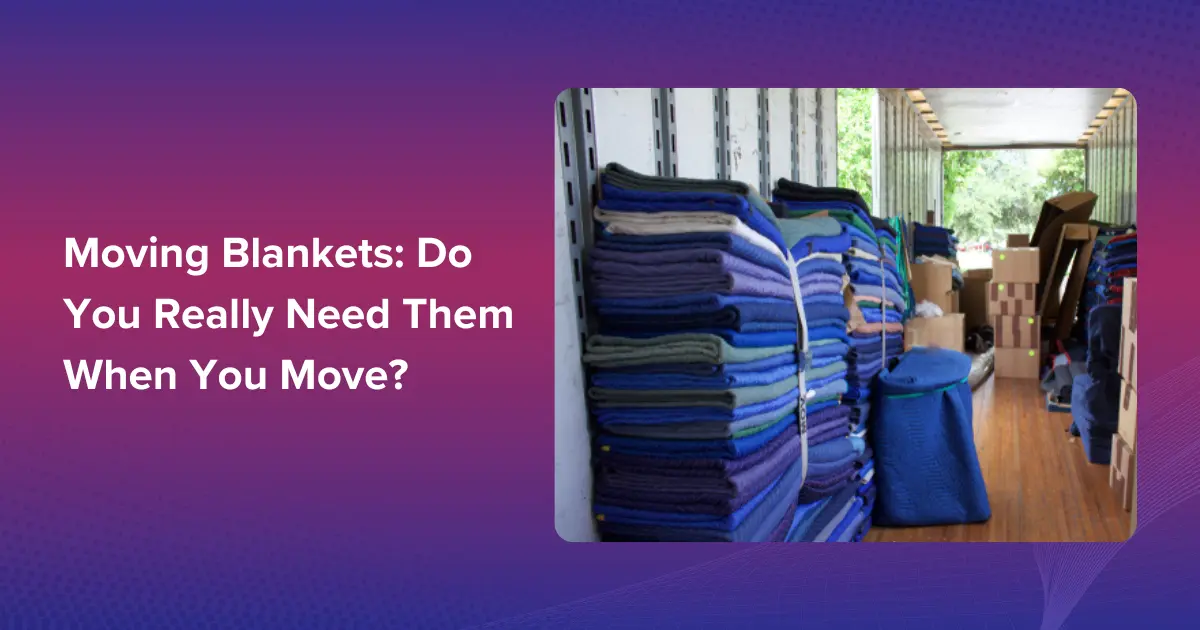
When preparing for a move, most people focus on boxes, bubble wrap, and packing tape, but there’s one crucial moving supply that often gets overlooked: the moving blanket.
Whether you’re planning a DIY move or hiring professional movers, moving blankets play an essential role in protecting furniture, appliances, and fragile items from dents, scratches, and other potential damage.
Unlike regular blankets, moving blankets (also known as furniture blankets or furniture pads) are made from thick, durable materials specifically designed for cushioning and absorbing impact during transportation.
Your fragile items might bump together in the back of a moving truck or van. That’s when moving blankets come into play, offering a layer of cushioning for both local and long-distance moves.
Understanding how moving blankets work, including the different types, the number you’ll need, and budget-friendly alternatives available, can greatly assist in protecting your valuables.
If you’re trying to figure out how to move without damaging your furniture, here’s a detailed look at why furniture blankets should be your priority on any moving checklist.
The Role of Moving Blankets: Why You Need Them When You Move
It’s not just about wrapping things up; moving blankets play a bigger role than most people realise.
Here are some notable advantages of using moving blankets, explaining why they protect your belongings, prevent damage, and support both DIY and professional moves.
Reliable Protection Against Damage
Typically, furniture corners, fragile decor, and walls get scratched when brushing against rough surfaces. Using cushioning materials, such as moving blankets, absorbs shocks and prevents direct contact. This reduces the chance of chips, cracks, and dents that are common during loading, unloading, and transit.
Fits Items of All Shapes and Sizes
Whether you’re packing a bulky cabinet, a heavy bookcase, or an oddly shaped lamp, moving blankets easily adapt. They can be draped, folded, or wrapped around almost anything, providing customized protection where traditional packing materials fall short.
Preserves Surface Finishes
Wood, metal, and glass surfaces are highly vulnerable during a move. Moving blankets add a thick, soft barrier that prevents finishes from scuffing, scratching, or pressure marks caused by friction with other items.
Easy to Use and Eco-Friendly
They don’t require a complicated setup, just wrap, tape, or tie. Additionally, moving blankets are durable and washable, making them reusable for future moves or organizing storage unit items, which saves you money and reduces waste.
Keeps Furniture Clean
Moving or packing blankets serve as barriers against dust and moisture, protecting against dirt inside the truck or during unforeseen weather. This is especially useful for upholstered or light-colored furniture that tends to collect dirt easily.
Trusted by Pros and Useful for Everyone
Professional movers swear by them for a reason: Moving blankets help reduce impact and wear during transit, offering essential cushioning for your belongings. This results in no furniture damage and satisfied customers.
Even first-time movers will find them useful, not just for protecting expensive furniture, but also for preserving items that hold personal value.
If you move by yourself, using blankets correctly is one of the smartest, budget-friendly hacks to reduce stress and avoid regrets.
5 Commonly Used Moving Blankets
Moving blankets are created differently. Some are designed for delicate furniture, while others are made to handle bulky or larger items.
Understanding the differences helps you select the right protection for your belongings, saving time, effort, and damage in the process.
1. Lightweight Blanket
These are thin, budget-friendly options best suited for light or less fragile items. They provide basic padding and are ideal when moving items like chairs, picture frames, packing artwork, and boxes that don’t require heavy protection.
2. Mediumweight Blanket
A step up in thickness and durability, mediumweight moving blankets are a reliable choice for most household items. They offer decent cushioning and are commonly used for items such as side tables, TVs, and medium-sized furniture pieces.
3. Heavyweight Blanket
Built for maximum protection, heavyweight blankets are thick, quilted, and often used by professional movers. They’re perfect for safeguarding large, heavy, or high-value items, when packing fish tanks, wardrobes, dining tables, and appliances.
4. Woven vs. Non-Woven Moving Blankets
Moving blankets come in both woven and non-woven materials.
Woven blankets are made from thick, tightly woven fabric threads, often made from cotton or polyester. They are stronger, more durable, and more suitable for repeated use.
Non-woven blankets, on the other hand, are made by bonding fibres without weaving. They are usually lighter and less expensive, but you may not get the same level of durability. These are perfect for one-time or short-distance moves.
5. Cotton vs. Polyester Moving Blankets
Cotton blankets are softer and more breathable, making them ideal for delicate furniture finishes. Polyester options are more durable, moisture-resistant, and easier to clean.
Among the many factors to consider before moving, choosing the right material is essential, especially if you want to pack valuable items carefully that need both softness and strength.
Tips on How to Properly Use Moving Blankets
Here’s a glimpse at smart techniques for covering various items, securing them properly, and avoiding common mistakes during the moving process.
For Small Items
These are lightweight and fragile items, such as electronics, small appliances, or picture frames. They need light padding to prevent scratches or damage during the move.
1. Pick a Lightweight Blanket
Choose a light-duty or medium blanket that’s easy to handle and fits the size of the item.
2. Lay the Blanket on a Flat Surface
Place the blanket on the floor or a table, then set the item on top. This provides you with full coverage and enhanced control.
3. Wrap the Item Completely
Fold the blanket over the top, sides, and bottom. Ensure that sharp corners and delicate parts are adequately protected with padding.
4. Secure with Tape or Stretch Wrap
Use packing tape or stretch film to hold the blanket in place. Avoid taping directly to the item.
5. Label If Necessary
If the item is being stored or moved with others, label the box clearly on the outside so you can easily identify it without needing to unwrap it.
For Large Items
These include furniture, large appliances, or oversized decor. They require two or more thick blankets to protect all surfaces and prevent shifting.
1. Choose Heavy-Duty Blankets
Go for thick, durable blankets that can handle the weight and protect all surfaces of the item.
2. Use More Than One Blanket
Lay the first blanket on the floor and set the item on it. Drape additional blankets over the top and sides until the area is fully covered.
3. Focus on Full Coverage
Ensure that corners, edges, and high-impact areas (such as feet or handles) are well-padded. You can double up blankets where needed.
4. Secure Everything Firmly
Use ratchet straps, bungee cords, or stretch wrap to hold blankets tightly in place. This stops shifting during loading and transport.
5. Stack and Load with Care
When loading into a vehicle or storage, position blanket-wrapped items upright and stable. Avoid putting heavy objects on top.
How Many Moving Blankets Do I Need for My Relocation?
Not sure how many blankets to get? You’re not alone. While some sources estimate blanket count based on the size of your home, that’s often misleading.
A one-bedroom apartment with heavy furniture and larger items may need more blankets than a two-bedroom apartment with minimal items. It all comes down to how many pieces you’re moving and how much protection each one needs.
Here’s a practical breakdown based on item type and size instead:
Items That Typically Need 1 Moving Blanket
These are usually small or lightweight items that can be fully wrapped in a single blanket:
- Dining chairs
- Side tables or nightstands
- Lamps
- Monitors and small desktop screens
- Microwave oven
- Small coffee makers or packing kitchen items and appliances.
- Small framed artwork or mirrors
- Toolboxes
- Home speakers
- Desk fans
- Gaming consoles and small electronics
Items That Typically Need 2 Moving Blankets
These items have more surface area or fragile components that need added padding:
- Coffee tables
- TV stands
- Bookshelves (medium size)
- Office chairs
- Washing machines or dryers
- Mini fridges
- Stove
- Medium-sized mirrors or art frames
- Small cabinets or drawer chests
- Upholstered benches
- Medium-size printers
Items That Typically Need 3 or More Moving Blankets
Larger and heavier pieces require full coverage and edge protection to avoid dents, scratches, or shifting.
- Sofas or sectionals
- Bed frames (especially king or queen size)
- Mattresses and box springs
- Dining room tables
- Dressers or armoires
- Large bookshelves or display cabinets
- Refrigerators
- Desks
- China cabinets or hutches
- Wardrobes
- Heavy gym equipment (like treadmills or bikes)
- Grand pianos or upright pianos
This breakdown provides a clearer understanding of how to plan your moving blanket supply. When in doubt, it’s always better to have a few extra than not enough, especially when protecting delicate surfaces or high-value furniture.
How to Rent or Buy Moving Blankets for a Move
You have two main options: renting or buying, and the best choice depends on your situation.
Renting Moving Blankets
Renting the right moving blanket is the most practical option if you only need it for a day or two.
This is often available when you hire professional moving companies, which typically include furniture blankets as part of their service or offer them as an add-on.
Some truck rental companies offer options for renting moving supplies. While other companies loan out blankets for a fee, you pay a deposit upfront.
This is the best option for most people who are making a one-time move or seeking convenience and efficiency. However, be cautious when they send moving blankets in poor condition.
Buying Moving Blankets
Buying moving blankets makes more sense if you expect to move frequently or plan to reuse them for storage, DIY projects, or other household tasks.
However, it requires you to shop around, assess the quality, and figure out what to do with them after the move.
For most people, however, buying isn’t necessary unless they plan to use it long-term.
What to Check Before Getting Moving Blankets
Not all moving blankets are made equal.
Here are the key things to review before renting or buying moving blankets.
Material Type
The fabric used in your moving blanket affects how well your items are protected. Quilted cotton, polyester blends, or non-woven fabrics offer better cushioning and longevity. This matters especially when you’re moving heavy furniture, as thin materials can tear or slip easily, leading to damage during transit.
Thickness and Weight
Heavier moving blankets, typically 5 to 7 pounds, offer more padding and stay in place better than lighter ones. This is particularly important when packing for a move that involves delicate or bulky items. Ensuring thick coverage reduces the risk of scratches or dents.
Size
The standard size of moving blankets is 72” x 80”, but that doesn’t mean one size fits all. Choosing the right size is crucial when you’re covering large items or need extra layers. Tailoring the size to your needs can help you downsize your home efficiently by protecting the things you’re keeping.
Stitching Quality
Durability is often reflected in the stitching. Loose seams or frayed edges are red flags. High-quality blankets have reinforced stitching that withstands repeated use.
Reviews and Feedback
Reading reviews is more than just browsing ratings. It helps you spot common mistakes others have made, such as choosing blankets that tear easily or don’t grip well. User feedback offers real-world insights into whether the blanket is slippery, thin, or worth its price.
Washability
If you plan to reuse your moving blankets, whether for another move, storage, or future resale, washability is a big plus. This also supports budget-friendly moving by avoiding the need to buy new blankets every time.
Price vs. Durability
While it’s tempting to choose the cheapest option, cheap blankets might not last through a single move.
Compare the price based on material type, stitching, and user reviews. When planning your moving budget, spending a little more upfront can prevent unexpected replacement costs or damage later.
Affordable Alternatives to Moving Blankets
While nothing beats the thick padding and surface coverage that real moving blankets provide, there are a few backup options that can help protect your belongings, especially during short moves or if you’re on a tight budget.
Here are some alternative materials you can choose from and what to expect with each.
| Alternatives | Usage | Downside |
|---|---|---|
| Old Towels and Blankets | A go-to household alternative. They’re soft and easy to wrap around small furniture or delicate items, such as lamps, decor, or electronics. | They tend to slip out of place easily and don’t cover large surfaces well. Best used with a tape or a rope to secure them. |
| Cardboard Sheets | Lay a flat cardboard between furniture pieces or against walls to prevent scratching.
Also useful for stacking in between frames, mirrors, or headboards. |
Offers minimal padding and is great for scuff protection, but not for shock absorption. |
| Paper Pads or Newsprint | It can cushion small, fragile items when wrapped tightly, especially in boxes. | Thin and tearable; it doesn’t offer much protection for furniture or large surfaces. Ink may transfer when using a real newspaper. |
| Bubble Wrap | Ideal for fragile items, bubble wrap provides excellent shock absorption when wrapped correctly. | Cost can add up fast if covering larger pieces, and it’s not reusable like moving blankets. |
| Thick Comforters or Quilts | Offer better padding than thin blankets or towels and work well for TVs, dressers, or glass tables. | They’re bulky and can be awkward to tape or hold in place. |
| Foam Sheets or Mattress Toppers | If you have old foam mattress toppers, you can cut and wrap them around corners or edges to prevent impact damage. | Not always available and may require cutting or extra securing. |
| Plastic Wrap or Stretch Wrap | Useful for securing drawers, doors, or bundling cushions together. It can also help your makeshift padding stay in place. | Offers zero padding itself; only effective when combined with another protective layer. |
| Clothing or Linens | Thick jeans, sweaters, or piles of t-shirts can be wrapped around smaller, fragile items inside boxes to protect them. | Only works well for box packing, not for protecting large furniture. |
While these alternatives work in a pinch, they aren’t meant for heavy-duty protection, especially during long-distance moves or when handling high-value furniture. If possible, investing in a few real moving blankets remains your best option for peace of mind and damage prevention.
Other Moving Supplies That Are Needed For Moving
Moving blankets are just one part of the toolkit. To organize your move, you’ll need to match them with the appropriate moving supplies and equipment, which we will briefly go over.
Moving Boxes
Moving boxes provide structured, stackable storage for all your items. They’re available in different sizes to suit everything from books to kitchenware.
Bubble Wrap
This protects fragile items, such as glass, ceramics, and electronics, during the move. The air-filled layers absorb shock and prevent breakage.
Packing Paper
It’s great for wrapping kitchenware, such as dishes, glasses, and other delicate items. Unlike a newspaper, it won’t leave ink marks or smudges.
Packing Tape
A strong tape keeps your boxes securely sealed. It also helps hold moving blankets in place on furniture.
Labeling Supplies
Labels or markers help you identify the contents of each box. This saves time during unpacking and reduces the risk of losing items.
Mattress Covers
These shield your mattress from dust, dirt, and accidental tears. They’re especially useful for rainy or dusty moving days.
Floor Runners or Protectors
Lay these down to prevent scratches and dirt from damaging your floors. They’re a must-have when moving heavy furniture or during high foot traffic.
Furniture Dolly
A dolly makes it easy to move bulky or heavy items or furniture with minimal strain. It also reduces the risk of dropping or dragging items.
Hand Trucks
Perfect for stacking and moving several boxes at once. They save time and prevent injuries during a move.
Straps and Bungee Cords
These keep your belongings from shifting around in the moving truck. Properly securing items prevents damage during transport.
Conclusion
Moving blankets may not be flashy, but they are among the smartest tools for protecting furniture, reducing moving costs, and making your next move stress-free. Whether you’re planning to disassemble furniture, dispose of an old piece, or donate items before you move, investing in proper moving supplies gives you the best chance of arriving at your new home damage-free. For everything else, your move starts with the right gear and solid planning.
FAQ
1. What makes moving blankets better than using plastic wraps or cardboard?
Moving blankets provide thick, padded protection that plastic wraps and cardboard cannot offer. They’re designed to absorb shock and prevent scratches during transport.
2. Can moving blankets also be used for storage, not just moving?
Yes! Moving blankets are great for long-term storage. They protect furniture and appliances from dust, moisture, and accidental bumps in garages or storage units.
3. How should I clean moving blankets after use?
Most can be machine washed on a gentle cycle or cleaned with a vacuum and a damp cloth. Just make sure to check the label; some types are dryer-safe, while others require air-drying.


