
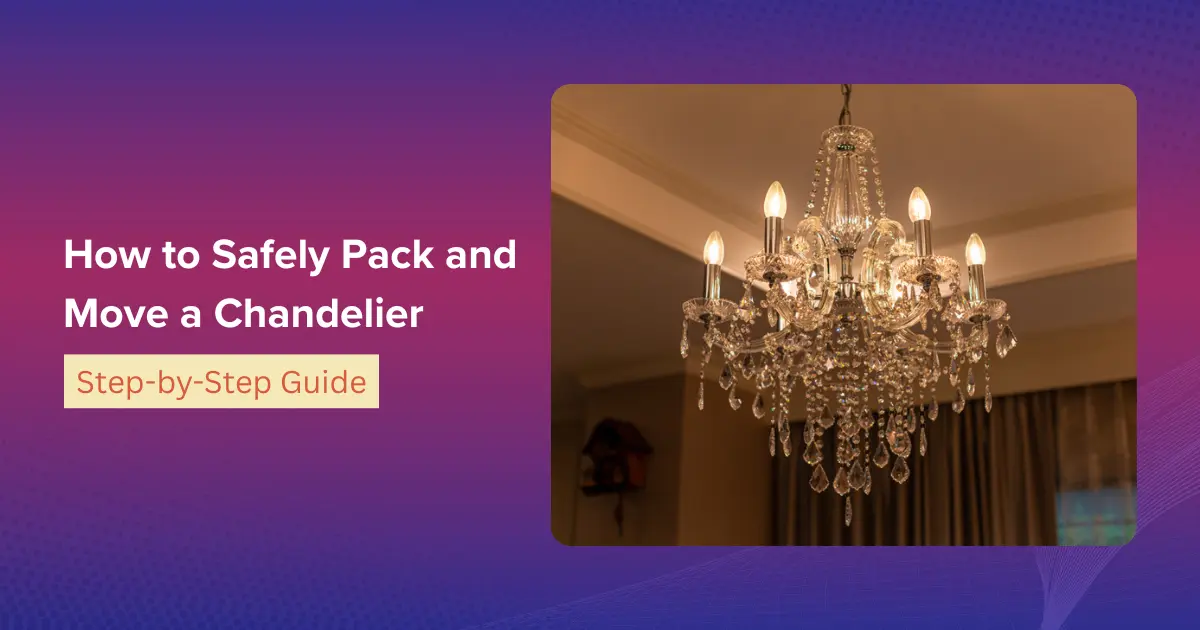
A chandelier is more than just a light fixture; it’s what many call a “sculpture of light.” The centrepiece of a room, and a piece of art that transforms light into elegance.
But when it’s time to relocate, packing and moving a chandelier is not as simple as boxing up everyday household items, as it requires specialised care. It’s fragile, often heavy, and sometimes an antique worth thousands of dollars.
Whether it’s a sparkling crystal chandelier in your dining room or a modern statement piece in your entryway, moving it is no small task.
But don’t worry. We’ve got your back.
In this blog, we’ll walk you through everything you need to know about how to pack and move your chandelier: preparation, safe removal, packing step by step, and moving tips.
We’ll also discuss whether to go the DIY route or consider the benefits of hiring professional movers to protect your valuable lighting fixture.
Preparation Before Packing and Moving a Chandelier
Every successful move starts with preparation. Chandeliers require more planning than most items, so don’t rush this stage. Proper preparation helps prevent moving day mistakes and ensures a smooth process.
1. Pre-Assessment and Planning
Start by evaluating your chandelier:
- Material – Is it crystal, glass, metal, brass, or antique?
- Size and weight – Large chandeliers may require professional movers or even a custom-built crate.
- Location – High ceilings or stairwells may make removal more complicated.
Ask yourself whether this is a DIY project or if it’s wiser to find the best local moving company with chandelier-handling experience.
Pro Tip: For antique or luxury chandeliers, consider moving insurance. Even expert movers recommend it to safeguard against accidental damage.
2. Cut Off Power
Always prioritise safety. Switch off the power to the room where the chandelier is located.
Use a voltage or circuit tester to confirm that no electricity is running before touching any wires.
3. Assess the Installation
Once the power is safely off, take a close look at how your chandelier is attached to the ceiling. Not all chandeliers are mounted the same way; some rely on simple brackets, while larger or heavier pieces hang from reinforced chains or solid rods.
By examining the ceiling mount and the fixture’s design, you’ll know what tools you’ll need and whether you’ll need an extra set of hands for support.
4. Gather the Necessary Tools and Materials
Having the right tools, moving supplies, and equipment makes the job safer and more efficient.
Tools You’ll Need:
- Screwdrivers
- Wire cutters
- Voltage tester and circuit tester
- Ladder or step stool
- Work gloves
- Measuring tape
- Moving straps, ropes, or bungee cords
Packing Materials:
- Drop cloth or plastic sheeting
- Wire nuts
- Bubble wrap or foam padding
- Plastic bags or small containers
- Packing peanuts
- Zip ties or twist ties
- Cleaning Cloth
- Packing tape and labelling marker
- Customised Box or Crate
If you’re moving on a budget, you may be tempted to use whatever boxes you have lying around. But for chandeliers, cutting corners can be risky. Investing in proper packing materials saves money compared to replacing damaged fixtures.
5. Wear Proper Attire
Wear non-slip shoes, work gloves for grip, and comfortable clothing. Safety glasses are also recommended to prevent dust or small particles from getting into your eyes.
6. Prepare Your Work Area
Place a drop cloth or plastic sheeting beneath the chandelier to catch screws or small pieces that may fall. Have the plastic bags or containers ready to organise hardware, crystals, and bulbs.
How to Take Down Your Chandelier
Taking down a chandelier is not the same as removing a regular light fixture. It involves electricity, delicate parts, and often heavy weight.
Follow these steps carefully to ensure the safety of taking down your valuable lighting piece.
Step 1: Turn Off the Power
You might be reading this again because this step is crucial, and forgetting it can put you and your assistants at risk.
This is one of the most important safety tips on moving electrical fixtures; NEVER SKIP THIS STEP.
Before you touch anything, go to your breaker box and switch off the power to the room where your chandelier is located. Use a voltage tester or circuit tester to confirm there’s no live current.
Step 2: Ask for Help
Chandeliers are expensive, fragile, awkward to handle, and often heavy. Never attempt to remove a chandelier alone.
Have at least one person with you: one to steady the fixture while the other handles tools and wires. This teamwork prevents accidents and broken parts.
For larger or antique chandeliers, it’s best to consider hiring professional movers experienced in handling bulky, delicate, and expensive items.
Step 3: Position the Ladder or Step Stool
Choose a sturdy ladder or step stool that allows you to comfortably reach the chandelier without over-stretching.
Place it directly under the fixture for proper balance.
Always make sure your helper is nearby in case you need support.
Step 4: Take a Photo of the Chandeliers
Before you start removing pieces, take clear photos of the chandelier from multiple angles.
These photos act as your guide when it’s time to reassemble. This step saves time and prevents mistakes, especially for chandeliers with many crystals or decorative ornaments.
Step 5: Remove the Lighting Fixture Components
Before detaching the chandelier from the ceiling, take off the fragile, easily removable parts. This lightens the fixture and prevents damage while you lower it.
Start with:
- Light bulbs
- Lamp shades
- Hanging crystals
- Any decorative ornaments
This reduces weight, makes the chandelier easier to handle, and ensures no delicate pieces break while you’re removing it from the ceiling. Place each item in small, labelled containers or plastic bags right away.
Step 6: Unhook All the Wires
Once all accessories are removed, carefully move on to the wiring.
Use pliers and screwdrivers to disconnect the wires; make sure to note which wire connects where (you can also take photos of this step). Secure exposed wire ends with wire nuts to prevent fraying or damage.
Never touch bare wire ends directly. Use a voltage tester to double-check that no current is running through the wires. If you still get a reading, head back to the main panel, find the correct breaker, and switch it off. Only proceed once the tester confirms there’s no power.
Pro Tip: If you’re unsure about handling electrical wiring, don’t risk it. Call in a certified electrician or even expert movers who are experienced in handling delicate electrical fixtures.
Step 7: Gently Bring Down the Chandelier
With the wires detached, it’s time to lower the chandelier.
Do not rush this step.
Hold the fixture steady, and with the help of your assistant, slowly guide it down. Keep it upright and balanced to avoid breaking delicate parts.
How to Pack Your Chandelier
Think of packing your chandelier as wrapping a piece of art. Each arm, crystal, and wire is fragile, and a careless move could leave you with costly damage.
Here’s the detailed guide on how to pack your chandelier to ensure it arrives ready to shine again.
Step 1: Clean Your Chandelier
Before you begin packing, use a soft microfiber cloth or lint-free cleaning cloth to wipe down each part of the chandelier. Remove dust, fingerprints, and dirt.
This step prevents grime from scratching or staining the chandelier during the move.
Pro Tip: Avoid harsh chemicals that could damage finishes or crystals. A simple damp cloth with mild soap works best.
Step 2: Measure the Weight and Dimensions
Use a measuring tape to determine the chandelier’s exact height, width, and length. Weigh it if possible.
These measurements help you choose the right moving box or custom crate.
Weight also matters when calculating the moving cost for a long-distance move or when moving on a budget, since shipping fees depend on size and weight.
Step 3: Disassemble the Chandelier
Never attempt to pack a chandelier in one piece; it’s bulky, fragile, and increases the risk of damage. Taking it apart makes wrapping, boxing, and transporting much safer.
Here’s how to do it properly:
3.1. Set Up a Safe Workspace
Since you already placed a drop cloth or plastic sheeting beneath the chandelier during the preparation stage, it will now come in handy as you begin disassembling it further. It will help to catch small pieces that slip from the chandeliers during the process and won’t break on the floor. Keep a small table or tray nearby to organise parts.
3.2. Remove the Remaining Arms or Branches
Unscrew detachable arms one by one. If they’re heavy or tricky to balance, have someone hold the main body while you remove them.
3.3. Take Off Crystal Strands or Groupings
Gently unhook strands or clusters, handling them by the metal hooks instead of the crystals. Wrap each strand immediately in tissue paper or bubble wrap to avoid tangling.
3.4. Detach Larger Decorative Panels or Shades
Carefully slide off glass shades, bowls, or panels. Wrap each piece separately and label it so you’ll know exactly where it belongs during reassembly.
3.5. Remove the Bulbs
If you haven’t done so already while taking it down, unscrew all bulbs and place them in a padded box. Wrap each bulb individually to prevent shattering.
Note: Place each part in a labelled bag or container so nothing gets lost. If your chandelier has many small crystals, group them by type to make reassembly easier.
Step 4: Wrap the Removable Pieces Individually
Every part of the chandelier should be wrapped on its own to prevent scratches, chips, or breakage during transport.
Crystals and Glass Pieces
Wrap each crystal in tissue paper first, then add a second layer of bubble wrap. Secure gently with tape (without touching the surface).
Bulbs
Always pack bulbs separately in a sturdy, small box. Use dividers, egg cartons, or foam inserts to keep them from clashing together during transport.
Metal Arms and Branches
Cover each arm or branch with foam padding or thick bubble wrap, then secure with tape or stretch wrap. This prevents dents and bending.
Decorative Panels and Shades
Use soft cloths, felt, or bubble wrap to protect painted, plated, or frosted finishes. Place them in separate padded boxes if possible.
Hardware and Screws
Place all small hardware (nuts, bolts, chains, hooks) in labelled resealable bags. Keep these in one box, preferably taped to the inside of the main chandelier crate, so nothing gets lost.
Tip: Don’t forget to label each wrapped item before packing it into boxes.
Step 5: Organise the Cords and Wires
Wiring is one of the most essential parts of your chandelier, so treat it with care. Bundle cords neatly using zip ties or twist ties, making sure there are no sharp bends that could weaken or damage the wiring.
Place them inside a plastic bag or wrap them with foam padding for extra protection. To make reinstallation easier, label each cord clearly, for example, “Main Wire” or “Ground Wire.” This saves you time and prevents confusion later.
Step 6: Wrap the Chandelier Body
The main body of the chandelier is the most fragile and valuable part, and it requires careful handling.
Cover it with several layers of bubble wrap or foam sheets, paying close attention to curved arms, edges, and decorative carvings. Secure the wrapping with packing tape, but avoid taping directly to the fixture.
Don’t forget to use gloves while wrapping this part to prevent fingerprints or accidental scratches.
Step 7: Choose a Proper Container
The container you choose can make or break your chandelier’s safe transport.
For smaller chandeliers, consider a strong, double-walled moving box. For larger or antique chandeliers, consider investing in a custom-built wooden crate explicitly designed for fragile and oversized items.
Make sure the chandelier will fit snugly inside; too much empty space allows movement, while a box that’s too small increases pressure on delicate parts.
Step 8: Cushion the Bottom of the Container
Before placing the chandelier or its parts into a box or crate, add 2-3 inches of packing peanuts, crumpled paper, or foam padding to the bottom.
This will create a shock-absorbing base that protects the chandelier from impact if the box is accidentally set down too hard.
Step 9: Box All Parts Individually
Never place all the chandelier parts together in one box. Each component, such as crystals, bulbs, and detachable arms, should go into its own smaller box or compartment.
Cushion these parts with packing peanuts or foam, and keep the chandelier body upright in its own container to prevent shifting.
Fill all empty spaces with peanuts or soft padding to prevent their movement during transport.
Pro Tip: For maximum protection, consider double-boxing. Place the chandelier’s main box into a larger outer box, adding extra padding in between for shock absorption.
Step 10: Diligently Secure the Boxes
Once everything is packed, use heavy-duty packing tape to seal all seams and edges. Reinforce the corners with extra tape to prevent splitting.
A quick test is to shake the box gently. If you hear movement, add more padding until everything is completely secure.
Step 11: Label Each Box Clearly
Proper labelling of your box is essential when moving a chandelier. Every box or crate should be marked with phrases such as “EXTREMELY FRAGILE – CHANDELIER,” “THIS SIDE UP,” “HANDLE WITH CARE,” or “CHANDELIER COMPONENTS.”
Adding these reminders ensures movers (or anyone carrying the box) know precisely what they’re handling and take the necessary precautions. Proper labelling also reduces the risk of rough handling and keeps you organised when it’s time to reassemble the chandelier.
How to Move Your Chandelier
Once your chandelier is carefully packed, the next challenge is moving it safely to your new home. Handling this fragile and expensive item properly during transport is just as important as packing your valuable items.
Here’s a detailed guide on how to move your lighting fixture without damage:
Step 1: Decide on Transportation
For short local moves, you can rent a moving truck if you’re comfortable handling delicate items.
For a long-distance move, or if your chandelier is antique or high-value, consider the benefits of hiring professional movers. They have the tools, experience, and moving insurance to move fragile lightning fixtures.
Tip: If you’re trying to stay within your moving budget, compare costs between DIY transport and choosing the right moving company.
Step 2: Load the Chandelier Boxes with Care
Loading is one of the moments where most accidents happen, and it’s a common source of moving day injuries.
The chandelier box (or crate) should always be one of the first things loaded into the truck so it won’t get crushed by heavier furniture.
Always lift with your legs, not your back, and have at least two people carry large chandelier crates. Keep the box upright during loading; this prevents wires, arms, and crystals from shifting.
If this feels like too much of a risk, don’t hesitate to hire movers to load your truck. Sometimes, hiring an expert mover can be a safer option than trying to muscle it through yourself.
Step 3: Find a Secure Spot in the Vehicle
Once the box is inside the truck, it needs to be placed where it won’t slide or get bumped. A tight corner near the front of the truck works best because it’s more stable during the move.
Avoid areas near sharp furniture or tools, and absolutely never stack anything on top of the chandelier box, no matter how light.
Step 4: Secure the Box to Prevent Shifting
Even the most carefully packed chandelier won’t survive if the box moves around during the drive. That’s why strapping it in is essential.
Use moving straps, ropes, or bungee cords to secure it tightly against the side of the truck. If there are gaps, fill them with blankets, pillows, or other moving supplies and equipment to cushion vibrations.
A truck with built-in rails makes this step even easier because you can tie the chandelier crate directly to them for maximum stability.
Step 5: Drive with Caution
Now comes the driving itself, and this is where patience matters. Whether you’re driving yourself or using a moving service, stress the importance of careful transport.
Avoid sudden stops, sharp turns, or high speeds, since jolts can shift or damage the chandelier. Take your time over bumps and uneven roads.
If it’s a long-distance move, schedule rest stops to check that the chandelier box remains secure.
Step 6: Unload the Chandelier Box Carefully
Even though the chandelier is loaded first, plan to unload it before the heavier furniture and boxes. Once you arrive, carefully move aside surrounding items to create a clear path. This ensures you can remove the chandelier safely without the risk of being crushed or damaged by bulky objects during unloading.
Have at least two people carry it out, keeping the box upright the whole time. Sudden twists, tilts, or drops can undo all your hard work.
This is also where the risk of hiring cheap movers really shows; inexperienced crews sometimes cut corners during unloading. With professional movers, you’ll know your chandelier is being handled with the care it deserves.
Step 7: Inspect Upon Arrival
Before unpacking, carefully check the box for signs of damage: dents, crushed corners, or rattling sounds. Then open it and inspect each chandelier piece for cracks or scratches.
Verify if the crystals, bulbs, and ornaments are in good condition.
If you’ve invested in moving insurance, this is the time to act quickly and file a claim if something’s wrong.
Once inspected, carry the box directly to the room where the chandelier will be installed.
Step 8: Prepare for Reinstallation
Finally, keep the chandelier box flat and secure until it’s time to unpack and put everything back together. Those photos you took before disassembly will be your best guide when reattaching crystals, arms, and wiring.
If you’re unsure about reinstallation, consider working with a licensed electrician or even an interior designer who specialises in chandelier installation and creative lighting ideas. Having it done professionally not only ensures safety but also guarantees your chandelier looks its best in the new space.
Decide Whether to DIY or Hire Professional Movers for Your Chandelier
This is where you weigh risk versus convenience. A chandelier isn’t just another item; it’s a centrepiece, often expensive, and sometimes irreplaceable.
That brings us to the big decision: DIY or professional movers.
Should you take on the challenge of disassembling, wrapping, and transporting the chandelier yourself, or trust expert movers who specialise in handling delicate high-value pieces?
Here’s a clear breakdown to help you decide which option best fits your needs:
| DIY (Do It Yourself) | Hiring Professional Movers |
|---|---|
| If your chandelier is lightweight, compact, and easy to disassemble, you can save money and stay within your moving budget by packing it yourself. | Professional movers have training and experience handling delicate fixtures, including antique and crystal chandeliers that are prone to damage. |
| You decide how to wrap, label, and organise every crystal, bulb, and wire. Great if you prefer a hands-on approach to packing your valuable items. | Movers are pros in handling specialty equipment, and come equipped with custom crates, padding, and specialised wrapping materials designed for chandeliers. |
| DIY works well if your fixture has fewer detachable parts and isn’t overly heavy or ornate. | Movers know how to disassemble, wrap, and transport oversized chandeliers without breaking arms, crystals, or wiring. |
| You can pack and move the chandelier on your own schedule, without waiting for movers. | Most movers offer moving insurance, giving you peace of mind that your chandelier is protected against accidents. |
| DIY means carefully disassembling, labelling, and wrapping every piece on your own. This can lead to moving day mistakes and costly damage. | Professionals handle the heavy lifting, wiring, and transport so that you can focus on other aspects of your move. |
Which Option is Right for You?
Choose DIY if you’re moving a small chandelier, have the right tools and materials, and want to save money while staying on a moving budget.
Choose professional movers if your chandelier is large, antique, or custom-made. In these cases, hiring professional movers can be a safer option since they know how to handle every fragile detail.
If you want a smooth and stress-free move, it’s best to find the best local moving company that has experience with chandeliers. They’ll take care of everything, from packing your valuable items to ensuring you avoid costly moving mistakes.
Final Thoughts
Chandeliers add elegance to a home, but moving them requires patience, planning, and precision. From cutting off electricity and disassembling parts to carefully packing and transporting, every step matters.
If you’re confident and budget-conscious, a DIY approach may work. But for larger, more delicate chandeliers, hiring professional movers can be the best choice.
Regardless of whether you decide to handle it yourself or find the best local moving company, following this guide ensures your “sculpture of light” arrives safely in your new home.
FAQ
1. How much does it cost to hire movers to move chandeliers?
The cost of hiring professional movers for chandeliers depends on several factors, such as the chandelier’s size, weight, fragility, the distance of your move (local or long-distance), and whether special packing materials or custom crates are required.
On average, you can expect to pay $200 to over $1,000. Luxury or antique chandeliers may cost more due to the extra care and professional chandelier moving services needed. To get the most accurate estimate, request a detailed moving quote from a licensed moving company.
2. Is it necessary to disassemble the chandelier before packing it?
Yes, in most cases, disassembling your chandelier before packing is highly recommended as this reduces the risk of breakage during transit. Smaller chandeliers may be packed in one piece, but for large, heavy, or antique fixtures, careful disassembly is the safest option.
3. Can I move my chandelier without professional help?
Technically, yes, you can move a chandelier without professional help if it is small, lightweight, and not overly fragile. However, it requires proper preparation, tools, and extreme patience.
For large, antique, or expensive chandeliers, attempting a DIY move poses a high risk of damage. In these cases, it’s best to hire expert movers who specialise in fragile and valuable items to ensure safe handling.
4. Should I insure my chandelier during the move?
Absolutely. Moving insurance for chandeliers is essential because accidents can happen, no matter how careful you or your movers are. Insurance provides financial protection against potential damage, loss, or breakage during packing, transport, and unloading.


